Criteria verified against SSA disability evaluation guidance. Reviewed October 2026.
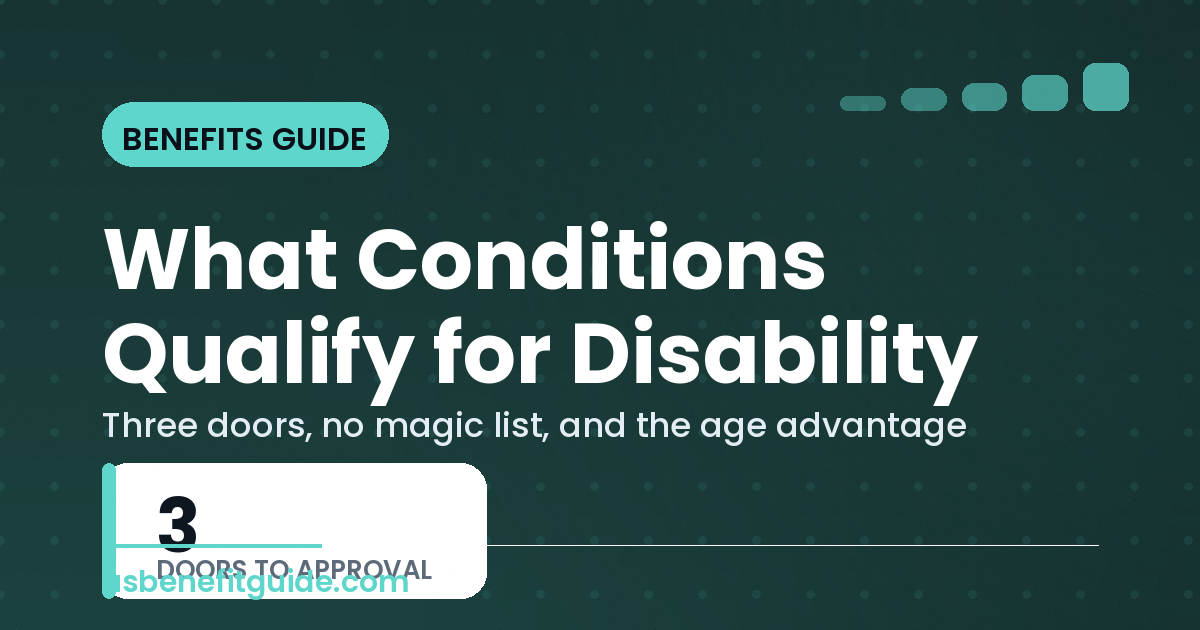
There is no official list of conditions that qualify for disability and no list of ones that do not, and understanding that single fact changes how you build a claim: Social Security pays for being unable to work, not for having a diagnosis. The Blue Book listings, the medical vocational grid, and the fast track programs are three different doors to the same finding, and this page explains each one, because which door fits you decides what evidence wins.
The Definition Everything Serves
You qualify when a medically determinable condition, physical or mental or both combined, prevents substantial work for at least 12 months or is expected to end in death. Severity of diagnosis is not the test; work capacity is. A condition managed well enough to work does not qualify however serious it sounds, and a modest sounding condition that genuinely ends your working capacity does.
Door One: Meeting or Equaling a Listing
Not sure if you qualify for disability benefits? Check in under 2 minutes — it's free, private, and shows estimated amounts.
The Blue Book organizes listings by body system, musculoskeletal, cardiovascular, respiratory, neurological, mental disorders, cancers, immune disorders and more, and each listing sets specific medical criteria. Meet a listing’s criteria exactly, or equal them in severity, and you are found disabled at that step without any vocational analysis. Listings are precise on purpose: a spine listing wants specific imaging and exam findings, a cardiac listing wants specific test results. The practical move is asking your doctor whether your records document the exact criteria for your condition’s listing, because listing level evidence is the shortest path in the system.
Door Two: The Grid, Where Most Claims Are Really Decided
Most people do not meet a listing, and their claims turn on residual functional capacity: what you can still do despite everything. The medical vocational guidelines, the grid, then combine that capacity with your age, education, and work history, and the rules soften dramatically with age: at 50 and again at 55, the same limitations that deny a younger worker can direct an approval, because the rules stop expecting older workers to retrain for new kinds of work. This is why two people with identical conditions get different outcomes, and why detailed functional evidence, what you can lift, how long you can stand, sit, concentrate, attend, matters more than the diagnosis line.
Door Three: The Fast Tracks
Our free checker shows every program you're eligible for with estimated monthly amounts. No signup needed.
See What I Qualify For →🔒 Free · Private · Takes 2 minutesCompassionate Allowances cover hundreds of conditions severe enough that approval is expedited on diagnosis level evidence, many cancers, ALS, and other serious diagnoses among them, often deciding in weeks. Quick Disability Determination flags other clearly qualifying claims by computer for fast handling. Neither needs a special application: the same filing, walked in our application guide, routes into them automatically when the evidence supports it.
What This Means for Your Evidence
Free and trusted resources to help you take the next step.
A disability lawyer can increase your approval odds significantly. Most work on contingency, meaning you pay nothing unless you win.
Find a Disability AttorneyHaving organized, complete medical records is the most important factor in disability claim approval. Get help gathering documentation.
Learn About DocumentationWhile waiting for SSDI, you may qualify for SSI, Medicaid, SNAP, and other programs that provide immediate support.
Check All BenefitsThese are recommended resources based on the topic of this article. We only suggest free, official, or widely trusted services.
Ongoing treatment records beat everything, because gaps read as improvement. Specific functional statements from your doctors beat sympathetic generalities. Mental and physical conditions combine, and the combination frequently qualifies where neither alone would, with the mental side’s own evidence rules in our mental health guide. And the whole evaluation runs through the five step machine in our determination guide, with denials answered through our denial guide.
Frequently Asked Questions
What conditions automatically qualify for disability?
Compassionate Allowance conditions come closest, expedited on diagnosis, and met listings direct approval. Everything else is decided on work capacity, which means no diagnosis guarantees approval and none rules it out.
Is it easier to get disability after 50?
Meaningfully, and again after 55: the grid rules direct approvals at capacities that deny younger workers. Age is the quietest strong factor in the entire system.
Can I qualify with several moderate conditions instead of one severe one?
Yes, combined effect is the standard, and combination claims are common winners. List every condition on the application, including the ones that feel minor, because the evaluation adds them.
Do mental conditions qualify like physical ones?
Fully, under their own listings and the same work capacity logic, and mental claims are among the most common approvals. Documentation practices differ enough that they earn their own guide.
My condition is not in the Blue Book. Am I out?
No, the listings are one door of three. Unlisted conditions win constantly through the capacity and grid analysis, on functional evidence.
The Bottom Line
Ready to apply for disability benefits?
Thousands of people miss benefits they qualify for. Check now and see your estimated monthly amount.
Check My Benefits in 2 Minutes →No magic list exists in either direction: listings for the clearly severe, the grid for everyone else, fast tracks for the gravest diagnoses, and work capacity as the question under all of it. Build the record around what you can no longer do, keep treatment continuous, and pick evidence for the door your claim will actually walk through. The amounts waiting behind an approval are in our SSDI amount guide.